WOW Branding

names + identities for the brave
  • Home
  • About WOW
  • Get Branded
  • Portfolio
  • Process
  • News
  • Blog
  • Contact
Call Now: 1-866-969-2726 TOLL-FREE 

Get Started with WOW!

  • HeadStart Form: Questions for Brand Development. Your responses to these questions will jump-start the branding process and allow us to prepare for the next step. Learn more ›

Quick Links

  • Get Branded: It's Time to Get Branded on Purpose Learn more ›
  • Top 5 frustrations of a CEO: Learn more ›
  • BSI: How does your brand measure up internally? Test your internal brand strength with our BSI. Learn more ›

Feature

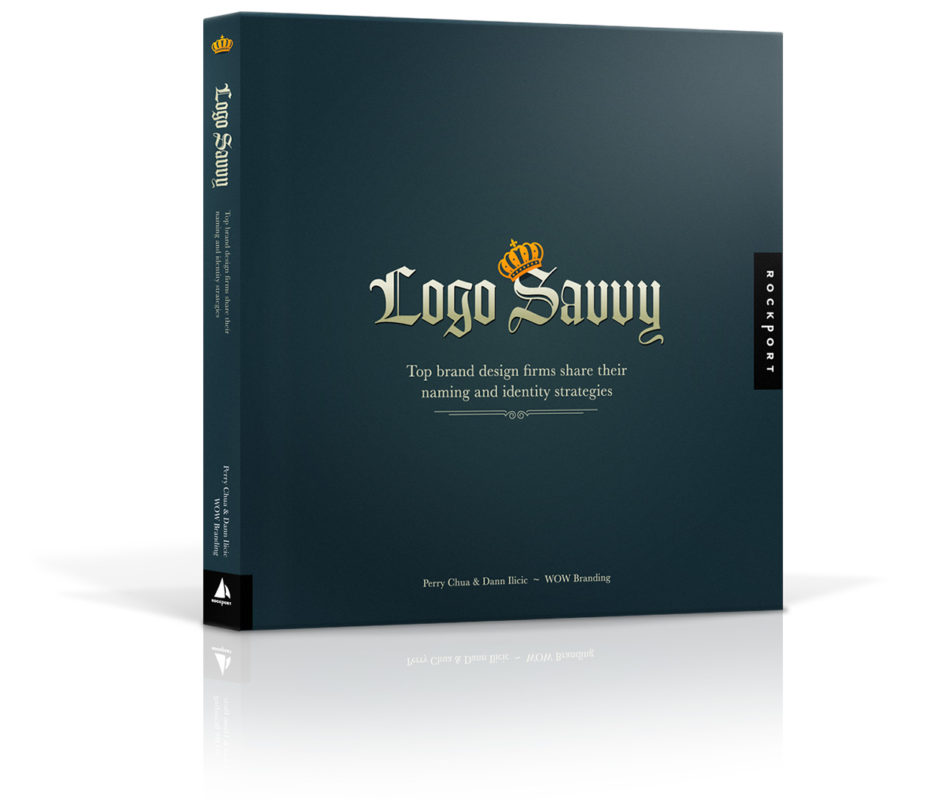
WOW Writes the Book on Branding. With case studies from around the world, this book is indispensable for those considering launching a new brand or revitalizing an existing one. Check out the book on Amazon.com ›››

Bookmark and Share


We'd love to tell you that branding is all about pretty design but we'd be lying. It takes balls to define your leadership, clarity and focus, and you'll need even bigger balls to execute on it. The branding process can reveal a bunch of ugliness as well as brilliance. Yes, branding hurts. Are you brave enough?  Get a regular shot of qualified comments, opinions, recommendations, tools, and ideas regarding branding and leadership. To inspire and provide food for thought.  Welcome to our blog!


Our Canadian Brand Essence - By Andrea Shillington

Nimbol Support - Monday, March 01, 2010

Our Canadian Brand Essence

by Andrea Shillington

February 28th, 2010 marked the day of something new, something special, something found in us all. It will be remembered as the day our Canadian pride reached an all time emotional high. All across the world, people gathered, and Canada’s national pride came to life with a “Go Canada”.

I was fortunate to be one of the many people pouring onto the streets of downtown Vancouver, just minutes after Crosby scored the golden goal for Canada. Entranced by the smiles, random hugs, high-fives, cheers and the instant friends gained. I was infected by the natural high of our shared joy.

Looking back on my pictures of Vancouver’s streets, from the opening ceremonies to closing, it’s evident that something changed. What few high fives I gave and received on the first day of the Olympics, became thousands on the last. What streets were once crowded in dark winter wear, turned to a sea of red and white. What Canadian wear was once a memento turned into a patriotic fashion parade: flags as capes and maple leaf makeup. Anything really, as long as it was red and white.

Post gold, I can’t help but wonder what it was? At first, it was our athlete’s perseverance and courage that struck an emotional chord. Then the sunny skies that put a spotlight over our lands picturesque backdrop and throughout it all, moments on the podium turned us all into winners.

But, what piece of the Olympic magic can we hold onto beyond this day? What is it that makes us so proud to be Canadian? What momentum can we continue to build in our great country? What makes us different than any other nation in the world? What binds us at our maple leaf-loving core?

Please share your thoughts with us. Let’s continue to build what we started.

Comments (3) | Trackbacks (0) | Permalink | Blog Home

Trackback Link
http://wowbranding.com/BlogRetrieve.aspx?BlogID=2562&PostID=51943&A=Trackback
Trackbacks
Post has no trackbacks.
Comments
Snoop 2 commented on 02-Mar-2010 07:56 AM
Good perpective on your view from Vancouver we too had the same sense of pride from ontario. the world has never seen so many Canadian flags.. The words lets go Canda are still resinating in my head
Tiffany commented on 02-Mar-2010 08:24 AM
Great article! It's true; the Olympics appears to have been the ultimate internal branding campaign for Canada.
Victoria commented on 02-Mar-2010 06:42 PM
Yes, keep the spirit alive !

Post a Comment


Captcha Image

Brand over-protection inspires creative abuse

Ahmed Ismail - Wednesday, January 06, 2010
Some of you may have heard about the scuffle between Vancouver Olympics officials and local apparel manufacturer Lululemon over the latter’s sneaky way of referring to the 2010 Vancouver Olympics without actually referring to the event by name. Lululemon Athletica has come up with a cheeky clothing line that’s named “Cool Sporting Event That Takes Place in British Columbia Between 2009 & 2011 Edition.” Olympic officials were quick to lash out at what they called “rogue advertising” but  Lululemon denied the name was a brazen bid to circumvent Vancouver 2010’s vigorous brand protection policies.

Everybody knows how seriously Olympic officials take their brand’s symbols and insignias, they are sacred and untouchable, and they come out with all their legal might after anyone that tries to dilute, defile or associate themselves with any Olympic symbol without paying the hefty corporate sponsor fees. This includes any mention of anything resembling mount Olympus, any image resembling the Olympic rings, The torch and even the words Vancouver 2010. Local Vancouver Greek restaurant Olympia has been in battle with Vanoc for years over the use of the Olympic torch and the rings in their signage which have been in use for many years but became an issue when it was known that the Olympics are coming to Vancouver in 2010. Olympia restaurant stood their ground and refused to budge to Vanoc demands, they started collecting signatures from people and eventually got their way and kept their signs. This may have opened a Pandora’s box of abusers and it may have encouraged Lululemon to go ahead with their cheeky attack.

While I think that protecting your brand is important for companies, but when it goes too far, when large organizations use excessive legal force and financial muscles to come after small shops. They end up being perceived as an overgrown Goliath, and that can end up hurting their own brand and even in some cases promoting the attacker’s brand,  if only  in the eyes of a certain segment of the market.  Lululemon realized that, and also realized there is a relatively significant segment of the market that is somewhat anti Olympic, and decided to capitalize on that. Not to mention the buzz that was caused by the controversy alone.

So if you decide to pull a fight over an insulted brand, Use your discretion to do so but subtly and gently and don’t make such a loud fuss, otherwise you will hurt your own brand and damage your own image.
Comments (0) | Trackbacks (0) | Permalink | Blog Home

Trackback Link
http://wowbranding.com/BlogRetrieve.aspx?BlogID=2562&PostID=49544&A=Trackback
Trackbacks
Post has no trackbacks.
Comments
Post has no comments.
Post a Comment


Captcha Image

Whose Differentiation strategy is better: PC or MAC

Sharmila Singh - Monday, November 30, 2009
I am sure all of you have seen the Mac/ PC commercials where you see Mac's point of view: where it's the reliable, cool and hip versus the unreliable, clunky and old school operating system! And I am sure you have to agree that Mac has a much better differentiation strategy than the PC, but why is it still a PC dominated world. Maybe Macs position of pointing out all the pains and frustrations are just not to convert users? Maybe people don’t care for an unreliable operating system - but rather they are scared of change. Or maybe, like the cell phone, people want to upgrade their operating system - so they can get the next cool trend.

Brand evangelists and marketers can all agree that Apple has done a brilliant job of differentiating themselves by merely simplifying an operating system and reinforcing it with great customer service. Although we constantly see Microsoft upgrade their processor - they still don’t change their service model or fix the “buggy, crashing” operating system. Why is that. Do they know they are giving Apple a competitive edge... Do they even care?

One has to wonder who will win and rule the computing world?

Yes Macs are cool and PC’s are more prone to crashes and viruses - but yet there are significantly more PC users than Mac users, at least 70% according to one statistic. So whose brand is stronger? The fact that the PC does very little to defend itself makes me wonder why everyone isn’t on a Mac already... The campaign has been going since 2006. But then I realize that "PC" is not even an actual brand that belongs to one company; therefore it cannot stand up and defend itself against the onslaught of Mac inspired insults. Microsoft occasionally takes the helm, these days with their I'm a PC and I'm 5 years old.

It’s similar to the Volkswagen trend, and the movement that followed when they first made their comeback in the car world. Volkswagen created a Jetta club - the trendy, urbanites drive Jetta's; this was their differentiation strategy to give re-birth to an old, tired brand. We have been witnessing these cool trend setting brands for years - but is it really enough to gain market share over competition or is it merely just a trend that will pass? I mean really - you have to admit - there are way more geeky computer nerds than cool, creative computer guys.

I was a PC user but switched to Mac, and I am happy about it. I mean, the time I save on my Mac versus a PC because of crashing and virus scans, I was able to finally take a vacation!!!

I am young - I am cool... hey! I am a Mac!
Will this message alienate the Old, Traditional, Corporate types that don't consider themselves super cool? i.e. big businesses.  and eventually drive them into the arms of their good old PC.? The devil they know all too well.
Comments (0) | Trackbacks (0) | Permalink | Blog Home

Trackback Link
http://wowbranding.com/BlogRetrieve.aspx?BlogID=2562&PostID=48518&A=Trackback
Trackbacks
Post has no trackbacks.
Comments
Post has no comments.
Post a Comment


Captcha Image

My date with branding.

Sharmila Singh - Thursday, August 06, 2009
Recently after being in a long-term relationship I found myself to be fabulously free and single. As an out-going, independent, modern gal my first instinct to meet new people was to go through the inconspicuous, the “be-who-I-want-to-be” route of on-line dating.  Through this experience I became acutely aware of all the branding involved in this modern world of dating.

At my disposal the three dating services that popped out at me were Plenty of Fish, Lavalife and E-harmony. In short, Plenty of Fish resembles the traditional night club of the dating scene, Lavalife’s positioned as a urban online lounge or a trendy coffee shop and E-harmony has replaced the traditional “meeting through friends” scene. Not only are the on-line dating companies specialized and target specific, I too was becoming a commodity.

After a couple of weeks of sending smiles, “ping-ing” people, or checking profile photos and passing judgement, I found myself browsing and selecting potential candidates with no substance or merit. I was picking out my ideal man like I was shopping at the grocery store - looking for good colour, freshness and ideally, some firmness.

In the end I came to the conclusion that online dating only succeeds through our failure and desperation of finding the “happily ever after”. It does amaze me how consumed we - social interactive beings- have been trained to communicate with the least amount of effort ever. We have become a digitized generation, lowering our social skills through the use of social online networks.

After my experiences online this fabulous commodity has gone offline, appreciating the real life - with real people.

To be continued....
Comments (1) | Trackbacks (0) | Permalink | Blog Home

Trackback Link
http://wowbranding.com/BlogRetrieve.aspx?BlogID=2562&PostID=43438&A=Trackback
Trackbacks
Post has no trackbacks.
Comments
Anonymous commented on 03-Sep-2009 12:11 PM
And where is Part 2 of this lovely Aug 6th blog entry?

Post a Comment


Captcha Image

Is Bing a good name for Microsoft's search offering?

Dann Ilicic - Monday, June 01, 2009
Anytime Microsoft does anything to challenge Google, it always makes for interesting news. Last week the New York Times did a story on Bing — the new name for Microsoft Live search. 

What struck me about the article had nothing to do with the name itself, but rather the asinine comment from Peter Sealey, Coca-Cola's former chief marketing officer who said " Microsoft should have picked a name that more directly connotes search... it's going to be an enormous expense to create an image for this thing called Bing."

I can't help but wonder what Mr. Sealey would have preferred. Perhaps something like InfoSeek of SearchSoft would have suited him better. The truth is most people gravitate towards names that are descriptive because they "get it" instantly, but those are also the names that are most forgettable. 

There are endless examples of successful companies that violate someone's idea of what a good name should be. As a naming professional, I can tell you that the name is nowhere near as important as the quality and distinctiveness of the offering from that company. As of right now, Bing does not provide much of a reason to switch from Google — at least not one that I know of.

According to Mr. Sealey's logic, there would be no Apple's, Yahoo's or even Google's for that matter. Names need to be memorable instead of descriptive, evocative instead of generic, brave instead of safe. 

So is Bing a good name for a search engine? Sure why not. Can Bing outsmart Google? Let's see. In the meantime, ask yourself what would it take for you to switch and if the name would have any influence on that. 
Comments (1) | Trackbacks (0) | Permalink | Blog Home

Trackback Link
http://wowbranding.com/BlogRetrieve.aspx?BlogID=2562&PostID=40234&A=Trackback
Trackbacks
Post has no trackbacks.
Comments
Ahmed Ismail commented on 02-Jun-2009 10:27 AM
I think it is a good name, it has a nice Bing to it, it can be used as a verb like Google, although it does sound funny when you say "I binged him/her and nothing came up" My first impressions of Bing is that it looks and feels pretty much like Google with a nice background image. whether it will bite into Google's pie will depend on more than the look and feel, and name for that matter. it is the search results and their relevancy that can attract more Bingers.

Post a Comment


Captcha Image

Cause for a good business

Dann Ilicic - Tuesday, May 12, 2009
My favorite entrepreneurial stories are those in which an undying faith and belief are required to combat the ridicule of doing something different. Casting the right vision and purpose for a company has to come from somewhere deep inside if it is going to be completely authentic, meaningful and sustainable. 

I came across TomsShoes.com—a company founded by Blake Mycoskie and built on a very compelling brand promise. For every pair of shoes you buy, they will send a pair to a child in a developing country as part of their One for One movement. 


What's even more amazing is how many people have adopted the cause and joined Blake in bringing his vision to life. Take a quick look on YouTube and search for Toms Shoes and you'll find tons of videos that tell the story. High schools, colleges and even other businesses have seen the value or Blake's vision - not because it was sold to them, but because it struck a cord. His idea has become viral and as a result thousands of kids now have shoes.

So here are a few questions to ponder. What is your business doing that is meaningful? What is connecting your people inside and attracting customers? What would it take for others to make unsolicited videos about your company? What do you believe in? 

Comments (0) | Trackbacks (0) | Permalink | Blog Home

Trackback Link
http://wowbranding.com/BlogRetrieve.aspx?BlogID=2562&PostID=39416&A=Trackback
Trackbacks
Post has no trackbacks.
Comments
Post has no comments.
Post a Comment


Captcha Image

Understanding why we buy—Words Matter

Dann Ilicic - Friday, May 08, 2009
I came across an interesting article today on CanadaOne.com that I believe we all should read titled 7 things you need to know about why people buy. Although all the points hit home, the two that really struck me from a branding perspective were #5 Framing and #6 Too Many Choices.

The concept of framing deals with how messages get communicated and more importantly, the influence that message can have on our decisions. We constantly get challenged by our clients to help them figure out "what" to say about their company or products, but that's only half the battle—it's equally important to nail how to say it. Once you've figured out "what" you want to say, make it a practice to brainstorm at least 10 ways to say it. Never write without first thinking about the outcome, action or effect on the reader. I've copied the section below form the article that illustrates how much words can matter:

"The way a question is framed can strongly influence how someone responds, especially when there is risk involved, for example the purchase of an expensive item.

Amos Tversky and Daniel Kahneman pioneered research in this area and are famous for their Asian flu experiment, where two groups were asked to select a program to combat a fictional flu expected to kill 600 people in the U.S.

Group 1 were presented with a choice between two programs:

  • Program A: "200 people will be saved"
  • Program B: "there is a one-third probability that 600 people will be saved, and a two-thirds probability that no people will be saved"

72 percent of participants preferred program A.

Group 2 were presented with the choice between:

  • Program C: "400 people will die"
  • Program D: "there is a one-third probability that nobody will die, and a two-third probability that 600 people will die"

78 percent preferred program D.

Altering the way the two options were phrased did not just change, but actually reversed participant's perception of the two options.

The way that you frame your marketing message can have a powerful impact on its ability to influence your customers, particularly if a decision comes with financial risk."

The concept of offering too many choices (product offerings) to people is also interesting. One of the biggest fears I see in our clients is keeping things simple. I believe you need to be brave to limit your offerings and get off the "if we show them everything, then they're more likely to pick something" mentality. This is true of product placement, your website and even your proposals. Is it clear what you're offering and are you making it easy to buy. Take a look at this excerpt below on the "jam" experiment and see if anything hits home:

A jam experiment conducted by Sheena S. Iyengar and Mark R. Lepper demonstrated that more choices might attract more attention, but fewer choices increased sales.

The researchers set up a tasting booth for exotic jams at a high end grocery store and rotated the display so that either 6 or 24 flavours of jam were on display. All consumers could sample as many of the jams as they wanted and everyone who approached the booth was given a coupon.

Ivengar and Lepper found that having a bigger selection of jams attracted more people to the booth: 60 per cent of the customers who passed the booth stopped when 24 varieties were on display, compared to 40 per cent when 6 jams were out.

Yet when it came to sales, the smaller selection won the day. Thirty per cent of people who stopped by the limited selection actually purchased a jar of jam, compared to just 3 per cent for those who stopped by the table when 24 choices were on display.

"This is kind of the conundrum of too much choice," said Ariely. "It attracts to people but then they end up doing nothing."

If you are trying to sell something you have to understand how complexity is working both for and against you. For example, having too many choices on your website may encourage customers to browse, yet deter them from actually buying.

Reducing the number of choices can not only increase sales, but it may help you save money as well as you will be focused on a small portfolio of products and services.


Comments (1) | Trackbacks (0) | Permalink | Blog Home

Trackback Link
http://wowbranding.com/BlogRetrieve.aspx?BlogID=2562&PostID=39299&A=Trackback
Trackbacks
Post has no trackbacks.
Comments
Heather MacIntosh commented on 31-May-2010 01:05 PM
That's interesting. Perhaps, the consumers, being newly introduced to a product, have a low commitment level. The vast number of choices overwhelms the commitment level and no purchase is made. However, when there are fewer choices to make (ie: fewer jams on display), the consumer isn't overwhelmed and is able to focus and commit to trying a product - thus, a sale is made. Just a thought.

Post a Comment


Captcha Image

Queensland 1, Alberta 0

Peter Andersen - Friday, May 08, 2009
If you follow the news (and you do..), you’ve probably seen the media hoopla around “the best job in the world”. It may be a job posting, but what it really is, is one of the most brilliant PR campaigns I’ve seen in a long time. The value of the global coverage and attention it has created, is beyond measurement. Queensland, Australia has been associated with the image of a tropical paradise in the minds of millions of people around the world. It probably is (Great Barrier Reef and all..), but know we all know.

Enter Alberta, Canada. Another part of the world that have been blessed with jaw dropping scenic beauty. Recently this Canadian province launched a new website promoting Alberta. It also got a lot of attention, but for the wrong reasons. It turned out that one of the photos used on the site was, in fact, showing a British landscape. And all hell broke loose.

Yes, it does seem a bit weird to use a photo from the UK to portrait the natural wonders of Alberta. Authenticity being the key word.

But that’s not my point.

Both Queensland and Alberta had the same objective and the same tactic. How the hell do we break through the noise and get some attention (and tourist dollars..) going our way?  Let’s have a website developed and support with some PR. The similarities stop there.

What a different approach - and result. One being truly innovative and putting Queensland on the dream destination map. The other being painfully traditional and executed in a way, that gave it it’s 15 minutes of fame for all the wrong reasons.

Game over.


Comments (0) | Trackbacks (0) | Permalink | Blog Home

Trackback Link
http://wowbranding.com/BlogRetrieve.aspx?BlogID=2562&PostID=39263&A=Trackback
Trackbacks
Post has no trackbacks.
Comments
Post has no comments.
Post a Comment


Captcha Image

Packaging vs. Product

Dann Ilicic - Friday, April 24, 2009
I'm sure that most of you have seen the Susan Boyle/Britain's Got Talent video by now on YouTube. I saw it last week when the views were fewer than 10 million and it has already surpassed 40 million. If you haven't seen it yet, please check it out - it will make your day.

The video got me thinking about how important it is to have a good product and that ultimately product is more important than packaging. So much of marketing is based on inflated claims that it is nice to find something genuine and authentic - like Susan Boyle.

I'm not saying that packaging isn't important - it certainly is. My point is that when companies put more emphasis on their packaging (marketing claims) than their product, it creates the disappointment we've all experienced. When it comes to brand building, we coach our clients to remember that the brand is made up of two parts: first, your ability to create an authentic, compelling and differentiating promise (package) that people give a shit about; and second, your ability to organize yourself around the delivery of that promise. I think we can all agree that Susan certainly delivered.

How's your promise and delivery doing? Are they aligned? Are you sure?
Comments (1) | Trackbacks (0) | Permalink | Blog Home

Trackback Link
http://wowbranding.com/BlogRetrieve.aspx?BlogID=2562&PostID=38797&A=Trackback
Trackbacks
Post has no trackbacks.
Comments
Ryan Parker commented on 28-Apr-2009 07:16 AM
I had the same experience with a carpet cleaning product called "Folex". I think the reason I noticed it on the shelf among the pretty bottles was the fact that it was so simple, "undesigned" and, therefore, different. The branding guy in me thought "now there's a company with confidence in their product...let's give it a try." I ended up buying a couple of products, and Folex was the only one that worked on a full glass of red wine on white carpet. Packaging matters. But that doesn't mean it has to look like everything else.

Post a Comment


Captcha Image

Your product failed – and I love it!

Peter Andersen - Tuesday, April 21, 2009
Low expectations are fertile ground for growing brand loyalty.

Companies spend a lot of money creating awareness and desire for their brands. Building positive expectations before the purchase. And so they should.

But here’s the catch, if the company fulfills its promise (price, service, quality, etc.) it merely lives up to what is already expected from its customer base. The customer is satisfied, but is not turned into a raving fan, passionately promoting the experience and the brand to anyone who cares to listen. There’s not a lot of brand equity to win by just doing what’s expected.

Now, at some point most products or services (if not all..) will fail in some area. Or, to put it in brand lingo terms, the product does not live up to its brand promise; the battery on your Mac laptop suddenly dies, the air-condition in your Toyota goes cold, the concierge at your hotel forgets to give you that wake-up call.

Not only is that annoying in itself, but the process of fixing the problem is in most cases the real pain in the...

For instance, your 14 month old vacuum cleaner sucks.. and not the way it’s supposed to. The mouth piece breaks in two and all you can do is vacuum small circular areas the size of a golf ball.
Now, subconsciously you’ve already gone through the scenario: Trying to find a relevant phone number on the manufacturer’s website, figuring out the specific part number, navigating through their phone maze, shipping the broken piece and finally getting the new part delivered straight to your front door - when you are not at home. In other words, you expect an experience you could do without.

And, this is where the opportunity is. The vacuum cleaner manufacturer has a perfect occasion to turn you into a raving fan of the brand by having a post-sales system in place that eliminates those steps mentioned above. Simply because you don’t expect to be wow’ed.

Here’s an example from my own world. I recently had a new faucet installed in my kitchen. About six months later the shower head (yes, it came with that..) didn’t work and I was immediately dreading an experience similar to the vacuum cleaner spiel. But to my great surprise, and relief, it turned out to be a completely hassle-free experience. No sending parts back and forth, no trying to find the receipt or arguing that it was covered by warranty. Just a quick phone call to a very nice sales person, and three days later the part was delivered to my home at a scheduled time.

I had never heard of this particular brand before, had no emotional connection to it, even though I use the faucet every day. But the fact that it broke down, or rather, the fact that Pegasus (for that is it’s name) had a system in place that completely wiped out my (negative) expectations, and transformed me from a brand ignorant to a brand evangelist for the company. No marketing dollars they could have spend, could have placed the brand so effectively on my short list as this post-sales system taking advantage of my pre-conceived, negative, expectations.

And next time I, or anyone I know, need a product within their range, you bet I’ll be a passionate Pegasus brand evangelist. The product failed, the brand prevailed.
Comments (1) | Trackbacks (0) | Permalink | Blog Home

Trackback Link
http://wowbranding.com/BlogRetrieve.aspx?BlogID=2562&PostID=37206&A=Trackback
Trackbacks
Post has no trackbacks.
Comments
Anonymous commented on 30-Mar-2009 03:31 PM
Good article, Interesting how customer service staff can be brand ambassadors and can make or break a brand.

Post a Comment


Captcha Image


Previous 1 2 Next

Recent Posts

  • Our Canadian Brand Essence - By Andrea Shillington
  • Brand over-protection inspires creative abuse
  • Whose Differentiation strategy is better: PC or MAC
  • My date with branding.
  • Is Bing a good name for Microsoft's search offering?
  • Cause for a good business
  • Understanding why we buy—Words Matter
  • Queensland 1, Alberta 0
  • Packaging vs. Product
  • Your product failed – and I love it!

Tags

naming a company Branding Hurts, blog Positioning Differentiation Competitive Advantage Creativity PR Packaging Vision & Purpose Brand loyalty brand promise online brands, commodity brands psychology
  • Brand loyalty (6)
  • brand promise (6)
  • Branding Hurts, blog (2)
  • Competitive Advantage (1)
  • Creativity (2)
  • Differentiation (1)
  • naming a company (2)
  • online brands, commodity brands (1)
  • Packaging (1)
  • Positioning (1)
  • PR (2)
  • psychology (2)
  • Vision & Purpose (2)

Archive

  • March 2010 (1)
  • January 2010 (1)
  • November 2009 (1)
  • August 2009 (1)


RSS
Subscription

Twitter

LinkedIn


WOW Branding testimonials

Video: WOW Branding testimonials
Things we are proud of. Click to watch the video.


Twitter | LinkedIn

COPYRIGHT 2008 WOW BRANDING. ALL RIGHTS RESERVED.